

If you’ve recently received a soil test report, you might be wondering what all those numbers and charts actually mean. At first glance, it can feel overwhelming — but it’s a valuable tool for creating a thicker, greener, healthier lawn. Or for understanding the soil in your garden, beds, trees or anywhere else you may have the need.
A soil test can take the guesswork away and help build a plan tailored specifically to your property.
🧪 What Is a Soil Test?
A soil test is a detailed analysis of your soil that measures:
- Nutrient levels
- Soil pH (acidity or alkalinity)
- Overall soil health
Think of it as a “health check” for your lawn. Instead of applying products blindly, a soil test tells us exactly what your lawn needs — and just as importantly, what it doesn’t.
📊 What Does the Soil Test Measure?
Macro-nutrients (Primary Nutrients)
These are the nutrients your lawn needs in the largest amounts and are represented on each bag of fertilizer (N-P-K)
- Nitrogen (N) – Promotes green color and growth
- Phosphorus (P) – Supports strong root development
- Potassium (K) – Improves resistance to heat, drought, and disease
Secondary Nutrients
These help support overall plant health and nutrient efficiency:
- Calcium (Ca) – Improves soil structure and root strength
- Magnesium (Mg) – Essential for deep green color
- Sulfur (S) – Helps plants absorb nutrients more effectively
Micronutrients (Trace Elements)
Needed in smaller amounts, but still critical:
- Iron (Fe) – Enhances rich green color
- Manganese (Mn), Zinc (Zn), Copper (Cu), Boron (B) – Support overall growth and development
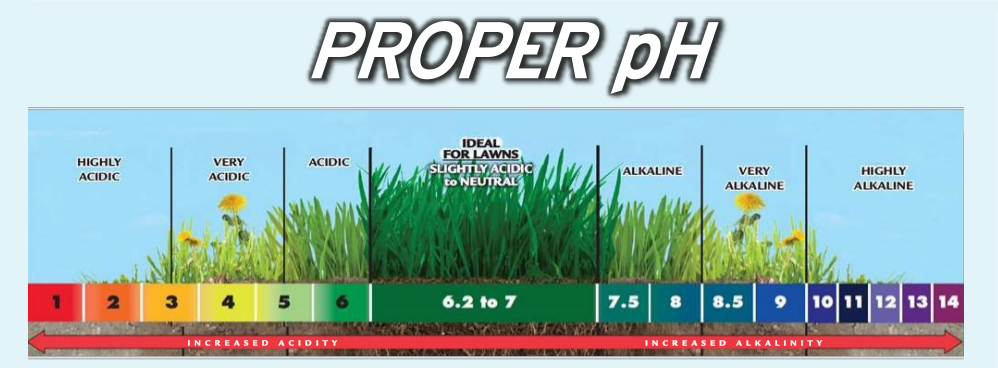 Soil pH
pH measures how acidic or alkaline your soil is.
- Most lawns perform best between 6.0 and 7.0
- If pH is outside this range, your lawn may struggle to absorb nutrients — even if they’re present
📉 Understanding Your Results
Each nutrient is compared to an optimal range:
- Low → Your lawn needs more of this nutrient
- Optimal → No changes needed
- High → Adding more could cause imbalance
Our goal is not to maximize every number — it’s to create the right balance for healthy, consistent growth.
🌿 Why Soil Testing Matters
With soil testing, we can:
- Apply the right nutrients
- Avoid over-fertilizing
- Improve lawn color and thickness
- Increase resistance to stress, weeds, and disease
It allows us to treat the root cause — not just the symptoms.
🛠️ What Happens Next?
Based on your soil test, we can adjust the treatments, or add specific treatments that may include:
- Targeted fertilization to restore key nutrients
- Micronutrient applications for improved color and health
- Soil amendments (such as lime or sulfur) if needed
Over time, this leads to:
- A thicker, greener lawn
- Stronger root development
- Better performance through heat and drought
📅 How Often Should You Test?
We recommend soil testing:
- Every 1–2 years for most lawns
- More often if your lawn is struggling or undergoing improvement
If you have questions about your soil test, we’re here to help.